Does the Aging Brain Lose Its Sense of Time? The Mathematics of Neural Aging
by Raphael Olegário · Published · Updated

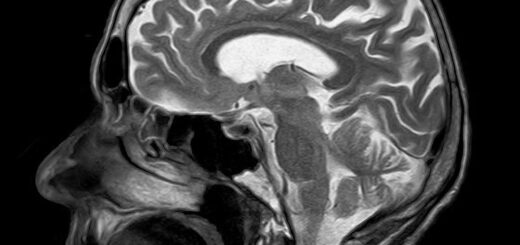
Brain aging is commonly associated with neuronal loss, structural changes, and slower cognitive performance. Yet recent developments in mathematical neuroscience suggest that another aspect deserves attention: how the brain organizes and maintains information across time.
Neural activity is not composed of isolated events. The state of a neural network at any moment is partly influenced by its preceding activity. This temporal continuity can be investigated through intrinsic neural timescales, which describe how long fluctuations in brain activity remain statistically correlated with their previous states. Mathematically, these properties can be estimated using autocorrelation functions, allowing researchers to examine the temporal persistence of neural signals.
In 2025, Wu and Gollo reported in Communications Biology that older adults exhibited shorter intrinsic timescales across several functional brain networks. Their computational simulations suggested that age-related changes in neuronal connectivity could contribute to reduced temporal persistence. A separate electroencephalographic investigation by Hayashi et. al, involving 196 younger and older adults, also identified shorter autocorrelation windows in the older group. These findings suggest that aging may modify not only the structure of cerebral networks but also the temporal dynamics of their activity.
However, shorter neural timescales should not be confused with faster thinking. They describe how rapidly neural activity becomes less correlated with its previous state, not how quickly an individual processes information or responds to a stimulus. The distinction is important because a person may exhibit slower behavioral responses while their neural signals display reduced temporal persistence.
Research published in 2026 has added further complexity to this picture. Shafiei et al., writing in PLOS Biology, evaluated intrinsic timescales across brain development and found that their organization follows a cortical hierarchy. Sensorimotor regions generally exhibit shorter timescales, whereas association cortices, involved in more complex information processing, display longer ones. Their findings also suggest that this organization develops during youth and becomes relatively stable in young adulthood.
This hierarchical arrangement may help explain why different brain systems require different temporal properties. Rapid sensory processing demands responsiveness to incoming information, while more complex cognitive functions often require the integration of information over longer intervals. Neural computation therefore depends not on maximizing temporal persistence, but on maintaining timescales appropriate to specific functions.
The relationship with memory is particularly interesting. In a 2026 NeuroImage study, Shen et. al found that neural autocorrelation windows were longer during memory encoding than during retrieval. They also reported associations between relatively stable individual differences in temporal dynamics and memory performance. Although the study does not demonstrate that age-related changes in timescales cause memory decline, it suggests that temporal organization is relevant to how information is formed and accessed.
A broader computational perspective was presented by Zeraati et al. in Nature Neuroscience in 2026. The authors investigated how mathematical models can connect neural timescales with network structure, neuronal dynamics, and behavior. Their analysis also highlighted an important limitation: different methods for estimating timescales do not necessarily measure the same physiological processes. Consequently, age-related differences in recorded signals cannot automatically be interpreted as evidence of impaired neuronal function.
These findings raise an important question! Could some aspects of cognitive aging emerge from changes in the balance between maintaining information and adapting to new inputs?
The possibility is scientifically plausible, but current evidence remains insufficient to establish a direct causal relationship. Most studies comparing neural timescales across age groups are cross-sectional, and measures derived from functional MRI may also be influenced by age-related changes in vascular physiology. Longitudinal studies combining electrophysiology, neuroimaging, and cognitive assessment will be necessary to determine whether temporal alterations precede, accompany, or simply correlate with cognitive changes.
From a mathematical perspective, the aging brain should not be understood merely as a slower version of a younger brain. Its dynamics may become reorganized in ways that influence how information persists, changes, and interacts across neural networks. Perhaps the most interesting question is not whether the brain becomes slower with age, but whether it changes the way it uses time.
References
Wu K, Gollo LL. Mapping and modeling age-related changes in intrinsic neural timescales. Communications Biology. 2025;8:167. doi: 10.1038/s42003-025-07517-x
Hayashi SR, Grigoryan A, Froese T. Age-related differences in intrinsic neural timescales (INTs): an analysis of autocorrelation windows (ACWs) in resting-state EEG across young and older adults. BMC Neurology. 2025;25:477. doi: 10.1186/s12883-025-04491-z
Shafiei G, Bagautdinova J, Sydnor VJ, et al. Intrinsic timescale develops hierarchically from sensorimotor to association cortex in youth and stabilizes in adulthood. PLOS Biology. 2026;24(9). doi: 10.1371/journal.pbio.3004037
Shen X, Cui X, Çatal Y, Li J, Northoff G. Intrinsic neural timescales shape memory encoding and retrieval. NeuroImage. 2026;325:121634. doi: 10.1016/j.neuroimage.2025.121634
Zeraati R, Levina A, Macke JH, Gao R. Neural timescales from a computational perspective. Nature Neuroscience. 2026;29:1534–1547. doi: 10.1038/s41593-026-02343-8
How to cite this post
Olegario RL. Does the aging brain lose its sense of time? The mathematics of neural aging [Internet]. Brasília (BR): Raphael L. Olegario; 2026 Nov 2. Available from: [https://rlolegario.com/2026/11/02/does-the-aging-brain-lose-its-sense-of-time-the-mathematics-of-neural-aging/]